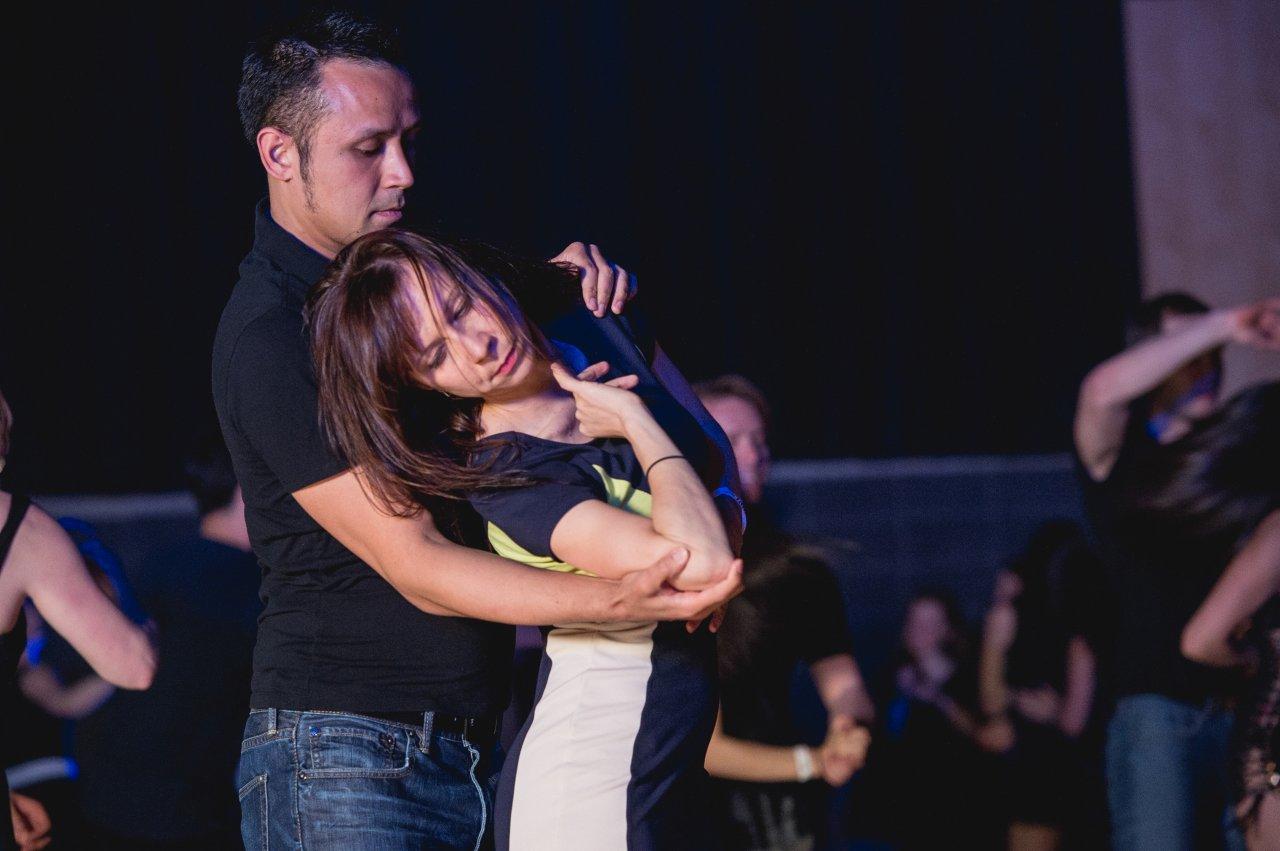
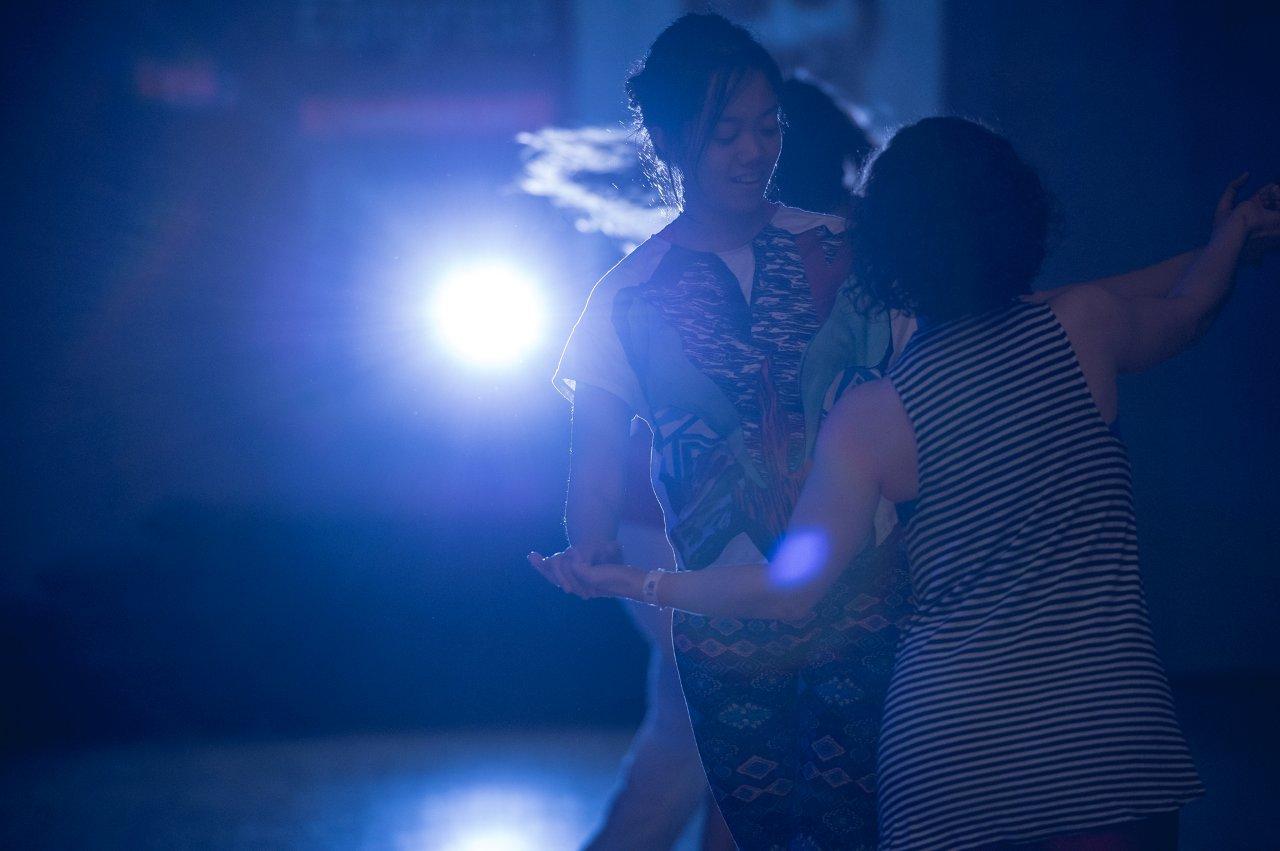
I recently arrived home from one of the largest Zouk congresses in the world. It was full of all kinds of social dance partners, but there are a few that truly stick out in my mind. One was a dance where, after the first 20 seconds, I became very scared for my safety. But, unlike every other rough dance I’ve had, the leader managed to transform this dance into one of my most memorable of the weekend.
-
-
Have you ever been in a dance class where the follows have been told to ‘Just Follow’? Have you ever heard someone told that follows have it so much easier because they ‘Just Follow’? Have you ever heard a female instructor devalued because ‘She is a follow, not a lead’? I have.
-
Dance is a largely physical expression. Not that many of us use our words all that much. In many circles, the physicality is one of the things that overcomes the barriers created by language. But, sometimes our words can have power. Power that can be used for great good… or great evil… Muahahahahaha!!
-
We’ve talked about whether you always need to say ‘yes’ to a dance. We’ve talked about what happens when someone says ‘no.’ But…
-
Part 1: Are you obligated to say yes to every dance? We talked last week about how no one is obligated to say ‘Yes’ to a dance… but what happens when someone says ‘No’ to you?
-
No, you are not. I will explain. We’ve all heard it. The famous saying: “Never say No to a dance”. I disagree. There are very valid reasons to say ‘Yes’ or ‘No’ to a dance. All of them are completely legitimate, and within your right to exercise. By giving ourselves the power to say ‘No’ to a dance, we help to preserve the joy we gain from actually social dancing when we want to and on our terms.
-
You know the person. Magically, they seem to find a continuous flow of new dancers for the scene… and many of those people actually stick around. They are what I like to call a ‘Dance Evangelist’. I self-identify as a Dance Evangelist. Since I started dance, I’m pretty sure I’ve gotten at least 50 people into various forms of dance – and that’s probably on the conservative end. Salsa, West Coast, Zouk. Even Lindy and Blues at a time. So, I feel pretty well qualified to write this, but I am always open to new ways to improve my own Dance Evangelism.
-
We all know at least one dancer who either looks better than they feel, or vice versa. What do we mean by ‘looking’ good vs. ‘feeling’ good? Feeling good is a connection skill based on how you are able to understand and respond to your partner in a co-operative way. The basis for feeling good is found in respect and understanding of your partner’s movement in relation to your own movement. It is an internally directed skill.
-
There are several bad habits or shortcomings on the dance floor. Some – like poor hygiene – you can’t really do anything about at the moment of dance. Sometimes, the primary concern is keeping yourself safe with a dangerous partner. However, we have put together a list of some of the most common dance floor complaints, and ways that you can help make these dances fun for yourself. 1. Off time. There goes the ‘1’ again.
-
“I dance because dancing is life” – ‘T’ – New York, NY – USA Why do we dance? I dance because there is nothing else that engages me the same way physically, emotionally and socially all at once. It is a journey of perpetual growth alongside people I adore and cherish. But, I’m not the only dancer out there. In a quest to find what drives us dancers in our crazy, colorful, passionate pursuit of dance, I decided to reach out to the community. From solo artists to stage performers and social dancers, some themes seemed consistent across genre and…
-
I have met very few dancers who feel they dance “Well Enough”. Most of the people who do feel that way are individuals who either: Think they know it all (if you’re this person, go read about DES); or, Really don’t love with a burning passion this thing we call dance, and see it more as a casual pastime.
-
Generally speaking: the stronger a dancer gets, the larger their ego becomes. Very often, the speed of ego expansion surpasses their actual dance growth. As the ego grows, it’s also a potential side-effect that the speed of dance growth will slow, and that they will become a toxic dance presence. Who is at Risk? All dancers are at risk of developing Dance Ego Syndrome, but you may be at an elevated risk if you fall into one of the following categories: Have been dancing more than 1 year Are no longer taking dance classes Are popular with dancers of the…
-
My dance heart is something very precious to me, and only a select few partners every get to keep a part of it. Those dancers I remember forever; the moments danced with them are permanently blazed in my memory. So, how did they do it?
-
On the social dance floor, there are two distinct groups that a lead or a follow will fall into. At its base level, a social dance will be either “Comfortable” or “Uncomfortable”. It doesn’t matter what level you dance at, you have complete control over which of the two groups you fall into. A complete beginner can give a partner a “Comfortable” dance, and a professional can give a partner an “Uncomfortable” dance quite easily. So, what (in my opinion) is the line between the two groups? To me, there are three main differentials:
-
There are many stages to social dancing. Here are some of the attitudes that I’ve noticed along the way, from all levels.