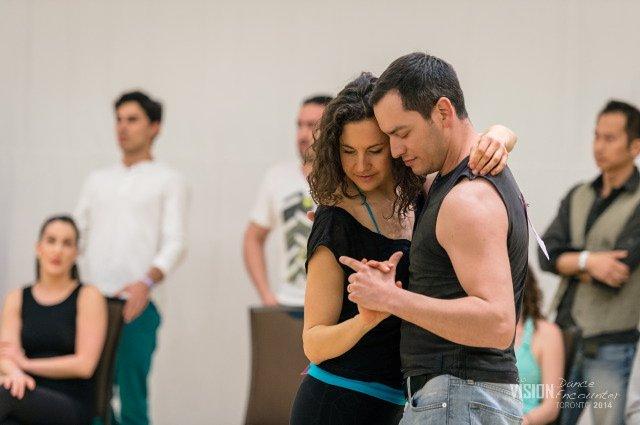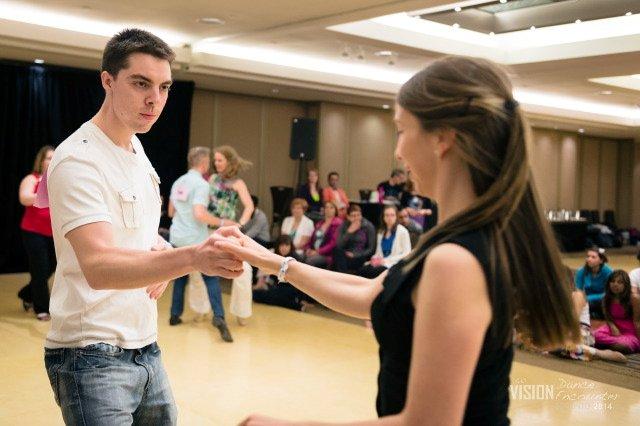
Last week, I saw a beautiful story of how a mother explained the concept of Santa Claus to her young son. It was about the idea of becoming a Santa, rather than not believing in him. It’s about learning to enjoy the giving of joy rather than only receiving joy. I think we can use this idea in social dancing, too. Receiving Joy in Dance When we start social dancing, many of us rely on our partners to give us joy. We are like children: still focused on our own development, rather than giving back to the dance. It’s not that we don’t want to do…

-
-
When I’m not dancing, I currently work on making plain-language legal resources. This means that I write things that are supposed to be easy to understand for people without advanced English language skills. Today, I had a thought: what if we apply the concepts of plain-language communication to social dancing? What if we had plain-language dancing? What is Plain-Language Communication? Put simply, plain-language communication is when your audience can understand something the first time they read or hear it. It’s making things as simple as possible for your audience. If you have to read something more than once to understand it, it isn’t…
-
I love how many dance communities have a strong emphasis on technical foundations. It’s something that advanced dancers always loved, but social media made the importance of technical education more prominent. Dance scenes are growing and expanding. Some students take many classes a week, or invest thousands of dollars in privates. But, are we overeducating our social dancers? Defining Overeducation For the purposes of this article, overeducation has less to do with ‘taking too many classes’ than with an overemphasis on one facet of dancing at the expense of other equally-important components. For example: if you take 200 hours worth of dance training and 199…
-
Many social dance styles are increasingly putting more emphasis on the development of technical proficiency. This is great on several levels. It prevents injury, raises the level of dancing, and keeps upper-level dancers engaged. It promotes artistry and interpretation. It’s a conduit for dance growth. But, it runs the risk of shutting out people who definitely deserve to be a part of our communities. I recently read a Tango-based article that opens with the sentence “When people really get into tango, it becomes fairly evident that group classes and a few private lessons aren’t really enough.” Enough for what? Unless my…
-
Are you someone who constantly feels like you’re ‘taking one for the team’ when you go dancing or get involved in the community? You might be a dance martyr. Dance martyrs are characterized by feeling like they’re sacrificing their own joy, standard of living, or other happiness by giving back to the dance scene. Dance martyrs can be anyone. They can be the dancer who begrudgingly accepts every dance – even if they didn’t want to. It can be the volunteer who makes the organizer feel guilty asking for help. It can be the professional who makes people feel obligated to support…
-
“Just feel it.” It’s a phrase meant to be a catch-all for expression in dance. It’s supposed to speak to an intrinsically natural sensation of being ‘in-tune’ with the music and dance. But, what exactly are we supposed to ‘feel’, and how do we use our ‘feelings’ in dance? More than a ‘Feeling’ Most of the time, the word ‘feeling’ gets conflated with the idea of ’emotion’. You feel happy, sad or angry. But, a ‘feeling’ isn’t limited to an emotion. It can also encompass a state of being, or a texture. For example, being tired is a ‘state’ of being – as…
-
There are countless reasons why dancing (in any form) is something you should have in your life. But there are some elements that are uniquely West Coast Swing. Here are the top 6 reasons I think you should consider learning it. 1. The Music Much like my other favourite, WCS has extremely variable music. From old school blues to contemporary pop and acoustic, you can dance to almost anything with a 4/4 time signature. This makes it easy to find music that you actually like to dance to. 2. The Play I have yet to find a dance that allows as much room for personal expression…
-
It’s extremely likely that you will develop feelings for another dancer. It’s also quite possible that you will meet someone who has mutual interest. This leads to the inevitable question: should you date that dancer? The answer? It depends. Some people swear that they will never date another dancer. Others claim they could only date a dancer. Whether you’re on one of these extremes or fall somewhere in the middle, there are important questions you should answer before getting involved. 1. How jealous are you? Jealous people typically have more problems dating dancers. If you are uncomfortable with the idea of your partner dancing with other…
-
Floorcraft: the dance equivalent of driving. Most people are reasonable drivers – but sometimes you get the truck driver who decides doing a U-turn through a red light on a 6-lane road is a great idea (true story). Or, you could be a completely naive country girl driving for the first time in a big city that accidentally drives the wrong way into the underground streetcars-only lane (It was poorly marked, looked like a normal left turn, and this story is definitely not about me.) Floorcraft is the same. On any given floor, you have people who are: Good at it (normal, experienced people),…
-
Disclaimer: Nothing in this article constitutes legal advice or a legal opinion. It is for information purposes only. The base for all discussion is in Canadian common law, and copyright law varies internationally. If you need legal advice on a matter, consult a legal professional licensed in your area. When should you credit? If you use an artist’s work, credit it back. Always. Even if they don’t expect it. Even if you think they’ll never find it. Even if you don’t consider it ‘art’. I’m not only talking about choreographies. I’m talking about photos, videos, costumes, music, and more. For…
-
I was honestly not expecting such an overwhelming response to my article on dance addiction. It caught me completely off-guard. From the responses, it’s clear that the article resonated with a lot of social dancers – and for that, I’m glad. But, what I want to address here are the people who felt like I was attacking the fact that dance has been a positive influence in their lives. I received several messages from people who highlighted how dance made them less lonely and more connected. On how it replaced superficial friendships with real ones. On how it gave life purpose, and illuminated faulty career…
-
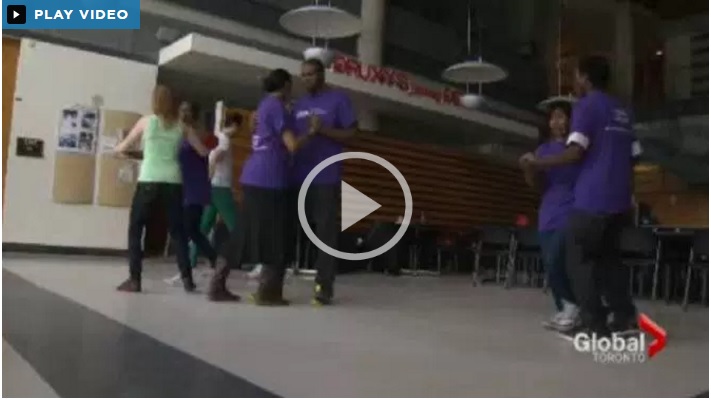
Working with our blind Zouk dancers has been a highlight of my dance life. A couple years ago, they were featured on Global News prior to their very first performance.
-
Sidenote: I’m glad people are finding this article useful. But, if you are reposting or resharing, please link and credit the original article. We love to joke about being ‘dance addicts’. We’re even proud of it. We glorify flying to other continents to pursue our hobby. We see world-famous dancers with 2 or 3 full Facebook accounts full of fabulous people. We laugh about spending more time on dance-related activities than our day jobs. I’m one of them – and I’m happy to be. It has given me an international network of great friends. It has challenged me physically and mentally. It…
-
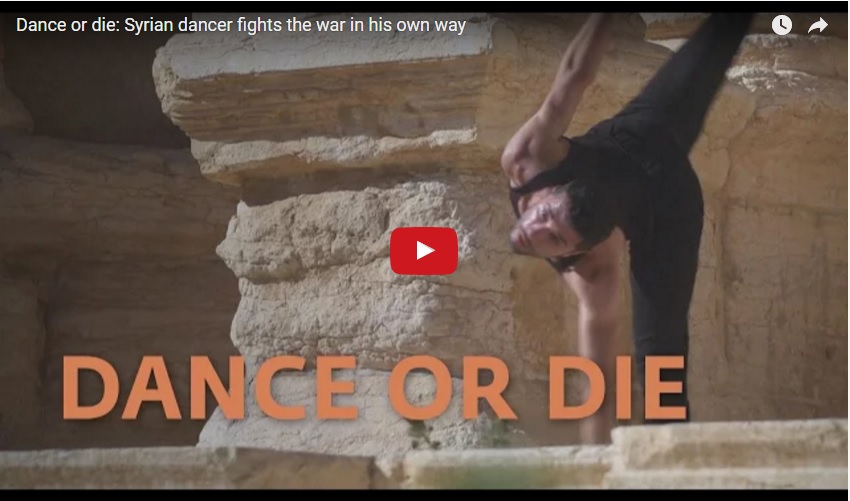
If you haven’t had the fortune to see this yet, I highly recommend watching. It’s a breathtaking story, and highlights a reality many dancers don’t necessarily have in the forefront of their mind. Meet Ahmad Joudeh: the dancer who teaches children as bombs fall around them.
-
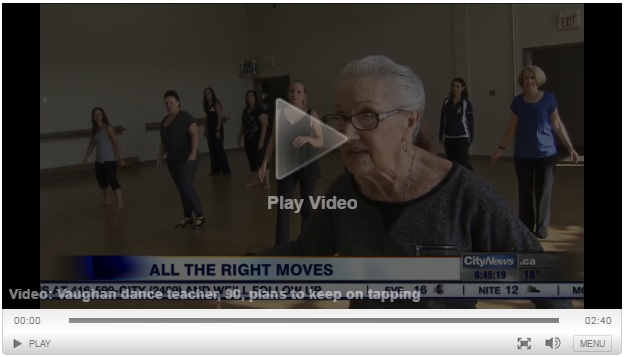
In Ontario, Canada, a 90-year-old tap teacher still fills her class with students. It’s perfect proof that you can dance at any age – though she has the advantage of a lifetime of experience. Video and story courtesy of 680 News.